Organized gambling houses did not appear overnight. For centuries, people played dice and card games in private homes, taverns, social clubs, and temporary gathering places. However, these informal settings differed from a dedicated venue where games were offered under an established system.
One important milestone in the history of casino gaming occurred in Venice, Italy, during the seventeenth century. The city’s experience shows how gambling, public order, and social entertainment gradually became connected.
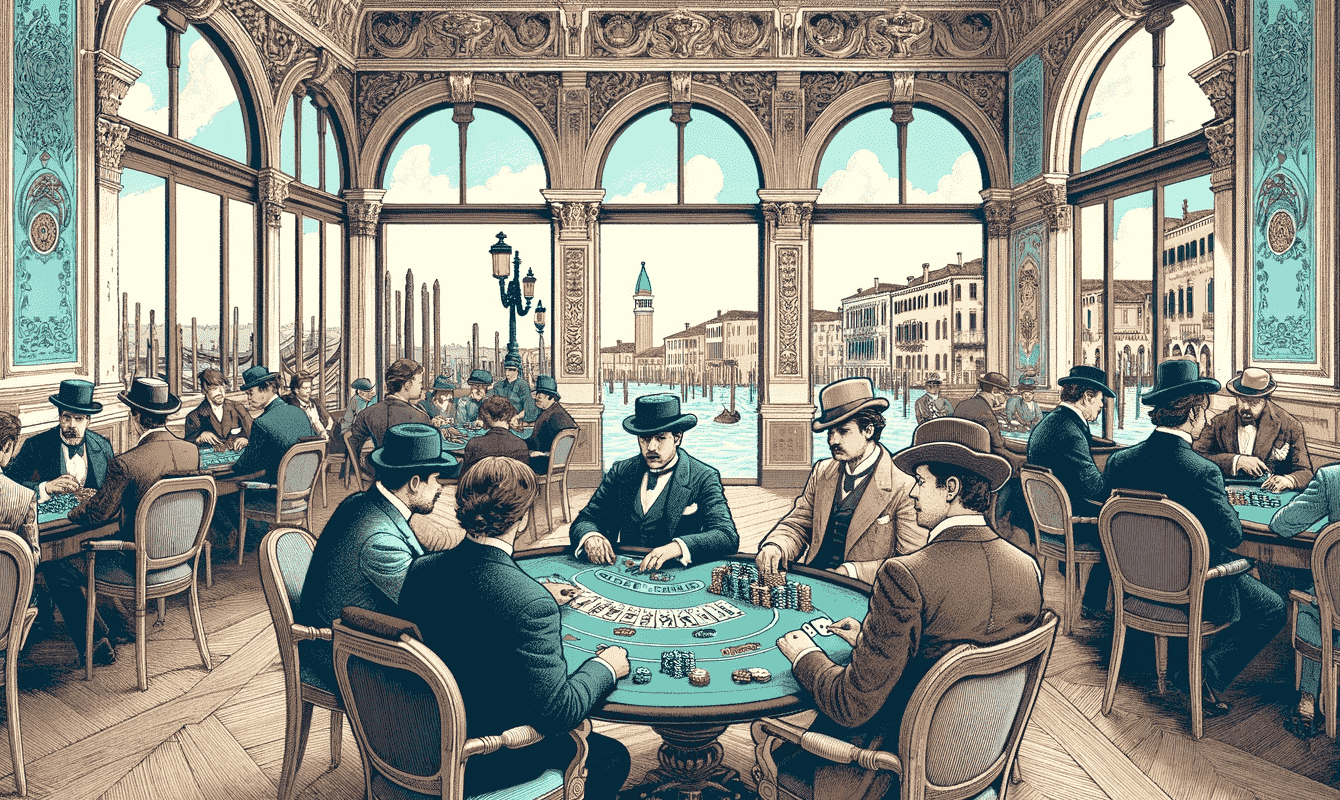
In 1638, Venice established the Ridotto, a government-authorized gambling house associated with the Palazzo Dandolo near San Moisè. It is widely regarded as one of the earliest public, state-sanctioned casino-style establishments in Europe. The venue was created during Carnival, a period when public celebrations attracted residents and visitors.
The Ridotto represented a change in how gambling was managed. Rather than relying exclusively on attempts to suppress wagering, authorities provided a designated setting in which certain games could take place under controlled conditions. Historical research on Venetian gambling describes this shift as part of a broader effort to regulate an activity that was already popular. <Cite refs={[“turn559279search0″,”turn559279search25”]}/>
The Ridotto offered games involving cards and chance. Two games commonly associated with the establishment were biribi, a game based on betting on numbered outcomes, and bassetta, a card game. These activities required more than a casual gathering. Players needed agreed rules, a way to determine winners, and a system for handling wagers.
Although the venue was described as public, access did not mean that everyone could participate on equal terms. High stakes, formal expectations, and the social structure of Venetian society made the experience more accessible to wealthy visitors. Masks were also associated with the Carnival atmosphere. Go with this link!
This distinction is important when comparing the Ridotto with modern casinos. It helped formalize gambling in a dedicated venue, but it was not a modern entertainment resort with hotels, restaurants, and large-scale attractions.
The establishment also reflected a continuing debate about gambling’s social effects. Authorities were concerned about disorder, financial losses, and the influence of wagering on public life. Regulation offered one way to manage these concerns, but it did not remove the underlying tensions.
In 1774, the Ridotto closed following changing political and moral attitudes toward gambling in Venice. Its closure did not end gambling in the city. Instead, gaming continued through other forms of social organization, including private clubs and gatherings. <Cite refs={[“turn559279search2″,”turn559279search26”]}/>
The Ridotto matters because it illustrates how gambling moved from scattered social activity toward a more organized commercial environment. Its significance lies not in being identical to every casino that followed, but in showing how a government could establish a recognized place for gaming.
Later gambling venues developed in different political and cultural settings, adopting their own rules, games, and styles of hospitality. The modern casino industry has changed dramatically since the seventeenth century, yet the historical questions remain familiar: who can participate, which games are permitted, how venues are regulated, and how entertainment can be balanced with public responsibility.